
Defeated Kings and Judges: A Testament of Power and Justice
The book of Judges recounts a cycle of Israelite disobedience, oppression by enemy nations, and subsequent deliverance by divinely appointed judges. This imagery explores the earthly consequences of rejecting God’s guidance.
Defeated Kings and Judges: A Testament of Power and Justice
Judges
1:1-7
1. Now after the death of Joshua it came to pass, that the children of Israel asked the LORD, saying, Who shall go up for us against the Canaanites first, to fight against them?
2. And the LORD said, Judah shall go up: behold, I have delivered the land into his hand.
3. And Judah said unto Simeon his brother, Come up with me into my lot, that we may fight against the Canaanites; and I likewise will go with thee into thy lot. So Simeon went with him.
4. And Judah went up; and the LORD delivered the Canaanites and the Perizzites into their hand: and they slew of them in Bezek ten thousand men.
5. And they found Adoni-bezek in Bezek: and they fought against him, and they slew the Canaanites and the Perizzites.
6. But Adoni-bezek fled; and they pursued after him, and caught him, and cut off his thumbs and his great toes.
7. And Adoni-bezek said, Threescore and ten kings, having their thumbs and their great toes cut off, gathered their meat under my table: as I have done, so God hath requited me. And they brought him to Jerusalem, and there he died.
Back to Index



NOTE: The images reflect the following descriptions related to the theme : Defeated Kings and Judges: A Testament of Power and Justice
- Macro closeup of a shattered crown, embedded with dust and thorns, resting on a parched battlefield. The crown is made of tarnished gold, reflecting the fallen glory of a defeated king. A lone, broken sword lies nearby, symbolizing the end of his reign.
- Macro closeup of a weathered stone tablet bearing an inscription in ancient Hebrew, cracked and fragmented, representing a broken covenant and the downfall of a kingdom. The texture should convey the passage of time and the weight of past failures.
- Bright morning sun, golden light illuminating a lush valley where a defeated army retreats in disarray. Their banners are torn, equipment scattered, and their faces display exhaustion and despair. The scene should show the consequences of war in a natural setting.
- Sunrise paints the sky in vibrant oranges and yellows above a rocky mountain pass, where a defeated king sits alone, brooding amid the ruins of his camp. His armor shows signs of battle, and the surrounding landscape reflects desolation.
- The setting sun casts long shadows over a desolate battlefield, the remnants of a lost battle strewn across the ground. Broken chariots and discarded weapons rest peacefully beneath the fading light, conveying a sense of quiet loss.
- Evening twilight covers a barren landscape as a defeated army, silhouetted against the dusky sky, trudges towards captivity. Their faces are barely visible, but their weary postures communicate their defeat and surrender to justice.
- Morning scene: A group of Israelite judges, depicted in simple linen clothing, are gathered around a rough-hewn table, studying the scrolls of the Law. Sunlight streams through a canvas tent, casting gentle light on their faces as they contemplate justice.
- Morning scene: A victorious judge, riding a donkey, leads a procession of defeated soldiers into the city. The scene reflects the judge’s power and the consequences of the conquered kings’ actions, with a focus on the contrast of victors and vanquished.
- Night scene: A group of defeated soldiers are imprisoned in a dimly lit dungeon, their faces marked by suffering and despair. The flickering light of a torch casts long, eerie shadows on the stone walls, creating a grim atmosphere.
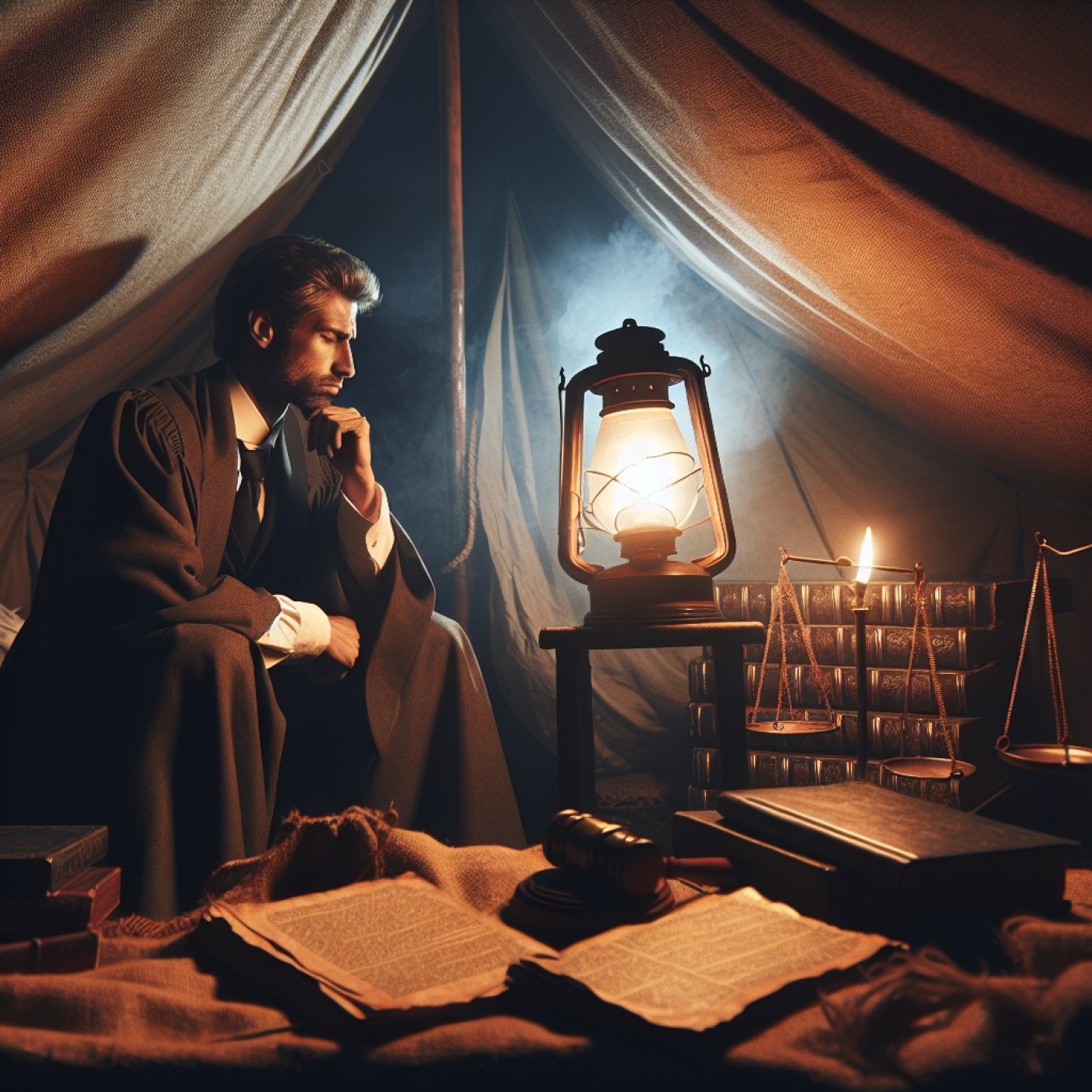
- Night scene: A judge, alone in his tent, contemplates the weight of his responsibility, illuminated by the soft glow of a oil lamp. The scene emphasizes the burdens of leadership and the moral decisions involved in dispensing justice.
- A meticulously detailed depiction of a broken chariot wheel, surrounded by scattered fragments of bronze and leather armor. The image symbolizes the fragility of power and the inevitable downfall of tyrannical kings.
- A close-up image of a hand holding a small, smooth stone, representing the simple tools of the judges, contrasted by the rich fabrics and ornamentation often associated with royalty. This signifies a return to justice and humility.
General themes for this chapter of the Bible: Conquest of Canaan; Judah and Simeon; The Cities of Canaan; Failure to Drive Out Nations
A link to this resource is much appreciated to let others know about this free christian resource. The AB Church in LAusanne-Renens is happy to make the image collection available for free.
Other Galleries for this theme / Bible book
Levitical Cities and Judges: Sanctuary and Justice

Achan's Sin and Defeat at Ai: The Price of Disobedience
Altar of Witness Dispute: A Judgment Scene
Caleb's Inheritance: A Promised Land
Cities of Refuge: A Sanctuary for the Unintentional Killer
Conquest of Northern Canaan: Judges' Era
Conquest of Southern Canaan: Judges' Era
Consecration at Gilgal: A Covenant Renewed
Crossing the Jordan - Joshua's Triumph
Division of the Land: Judges and Inheritance
The Fall of Jericho: A City's Demise
Inheritance of Joseph's Tribes and Group Judges
Joshua's Commission and the Judges: Conquering Canaan
Joshua's Farewell and Covenant Renewal
Judah's Inheritance: A Land of Promise
Land Still to Be Conquered: Judges' Justice
Levitical Cities and Judges: Sanctuary and Justice
Defeated Kings and Judges: A Testament of Power and Justice
Rahab and the Spies: A City's Hidden Faith
The Gibeonite Deception
Victory at Ai: Joshua's Conquest

Related Pages: thematic Bible Images (French Version)