Thematic Bible Images

Jehoahaz and Jehoash: A Divided Kingdom

The reigns of Jehoahaz and Jehoash in Judah and Israel, marked by war, oppression, and religious turmoil.

Jehoahaz and Jehoash: A Divided Kingdom

[getbook volume=KJV bibleurl=https://ab-renens.ch/bible-king-james-version-kjv/ book=2 Kings 13 chapter=1-9 linkverse=false multiverse=false ]

Back to Index

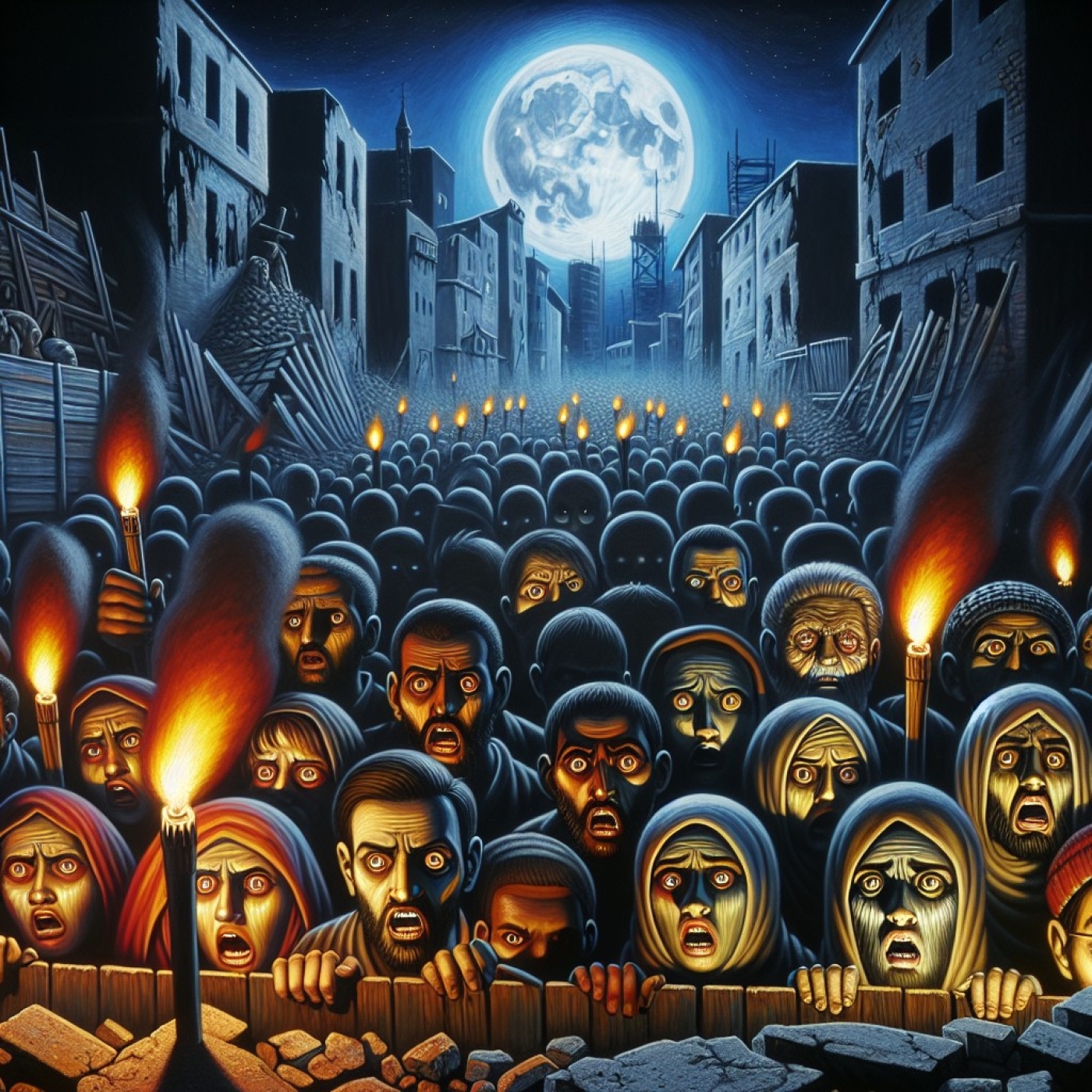
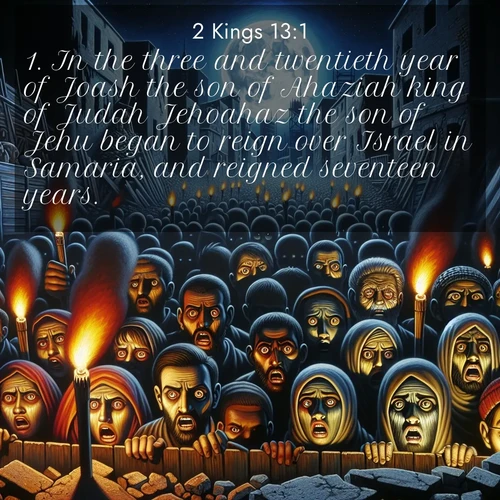
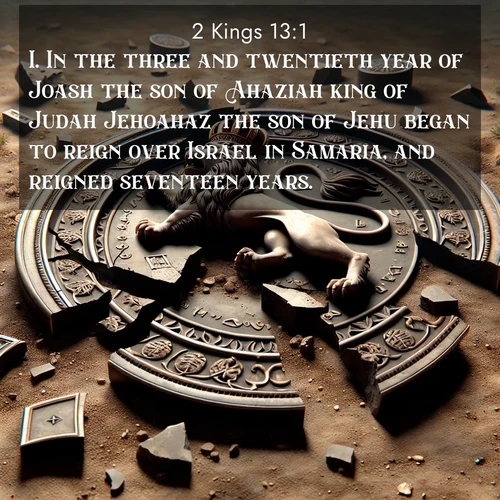
A dark, moonlit night in a besieged city. The flickering flames of torches cast long, dancing shadows on the faces of anxious citizens peering through a crumbling city wall. The scene should evoke a sense of fear and uncertainty during a time of war.  The besieged city symbolizes the vulnerability and fear experienced by the citizens during times of war.A dark, moonlit night in a besieged city. The flickering flames of torches cast long, dancing shadows on the faces of anxious citizens peering through a crumbling city wall. The scene should evoke a sense of fear and uncertainty during a time of war.  The besieged city symbolizes the vulnerability and fear experienced by the citizens during times of war.A detailed depiction of a royal seal, perhaps depicting the Lion of Judah or other relevant symbolism, broken and discarded in the dirt. The brokenness symbolizes the fractured state of the kingdom under Jehoahaz and the consequences of his actions and decisions.  The broken seal represents the fractured kingdom and the failure of leadership under Jehoahaz.
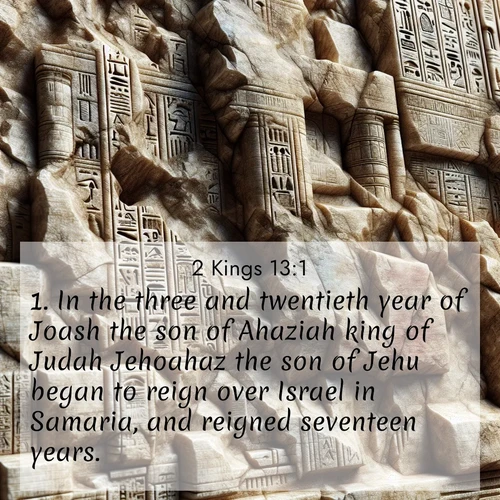
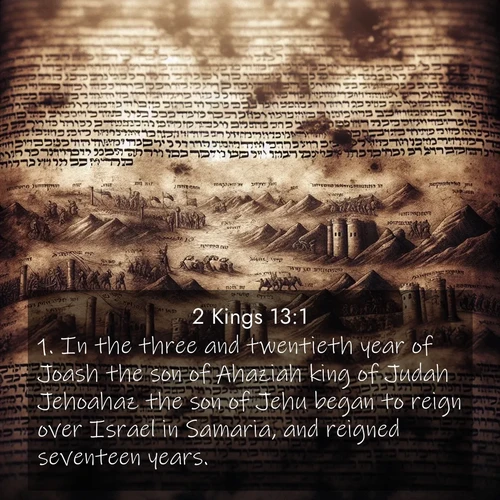
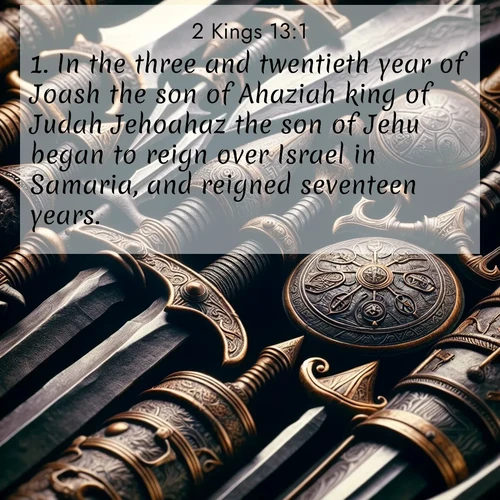
A close-up of a weathered stone inscription, partially eroded by time, hinting at the names and accomplishments of Jehoahaz and Jehoash. The partially obscured nature of the inscription reflects the obscurity and fragmented history surrounding their reigns.  The weathered inscription highlights the fragmented historical records and the obscurity surrounding their reigns.Macro closeup of a worn ancient Hebrew scroll detailing the conquests of Hazael, King of Aram, during Jehoahaz's reign.  Focus on the faded ink depicting battle scenes and the names of cities sacked. The scroll should be subtly illuminated from a single light source, creating a dramatic chiaroscuro effect.  This macro closeup focuses on the written record of Hazael's conquests, reflecting the military challenges faced by Jehoahaz.Macro closeup of a collection of ancient bronze and iron weaponry – swords, spears, shields – showing signs of wear and battle damage. Each piece should bear subtle symbols reflecting the competing kingdoms of Israel and Judah.  The image should evoke the violent conflicts of the era.  The weaponry symbolizes the violent conflicts and instability characterizing the reigns of Jehoahaz and Jehoash.
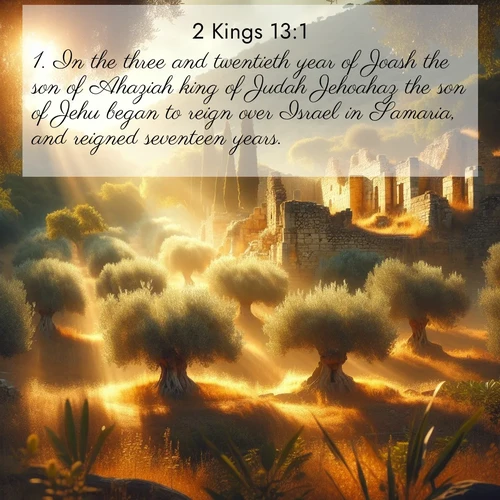
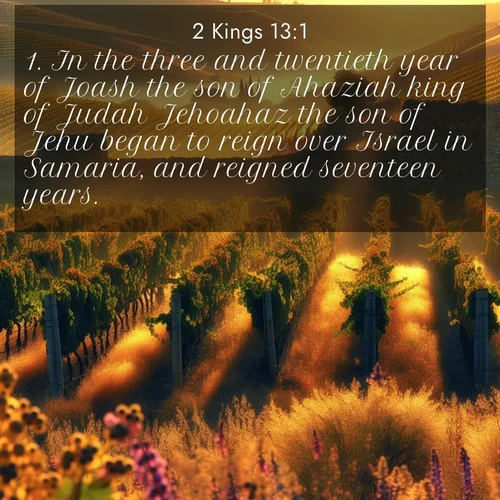
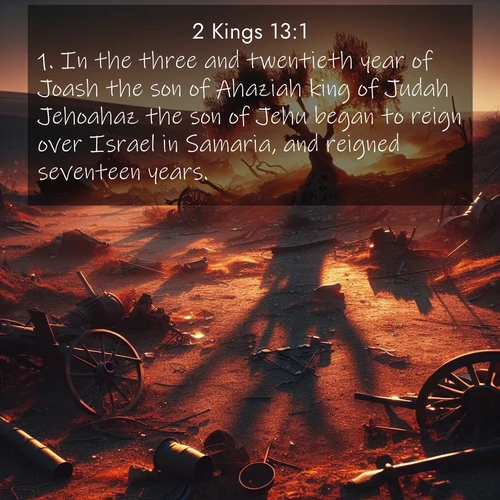
Bright morning sunlight bathes a lush olive grove in the hills of ancient Israel.  The light, dappled and golden, reveals ancient stone walls and ruins, hinting at a once-thriving village now fallen into disrepair, symbolic of the weakened kingdom under Jehoahaz. The scene should exude a sense of both tranquility and decay.  The olive grove represents the agricultural landscape of Israel, juxtaposed with the decay symbolizing Jehoahaz's weak reign.Golden morning light illuminates a vineyard laden with ripe grapes, reflecting the agricultural prosperity that existed in spite of political instability during Jehoash’s reign.  The vineyard is enclosed by a low stone wall, symbolizing both the vulnerability and resilience of the kingdom.  Wildflowers bloom in the foreground.  The vineyard and its abundance symbolize the relative prosperity despite the political instability during Jehoash's rule.Evening light casts long shadows across a desolate battlefield.  Scattered remnants of broken chariots and shattered weaponry litter the ground; a lone, windswept olive tree stands sentinel, its gnarled branches silhouetted against the fading light, representing the losses sustained during Jehoahaz's reign.  The desolate battlefield captures the aftermath of conflict, illustrating the losses during Jehoahaz's reign.
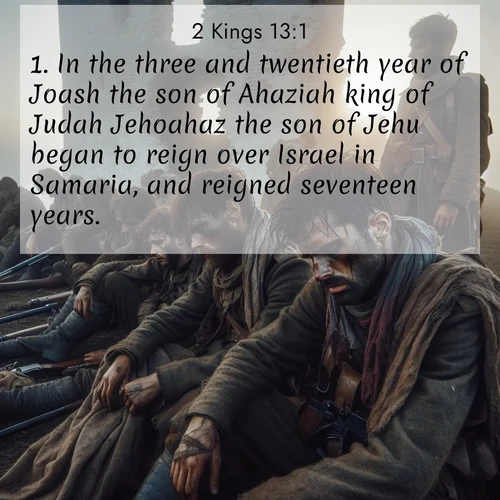
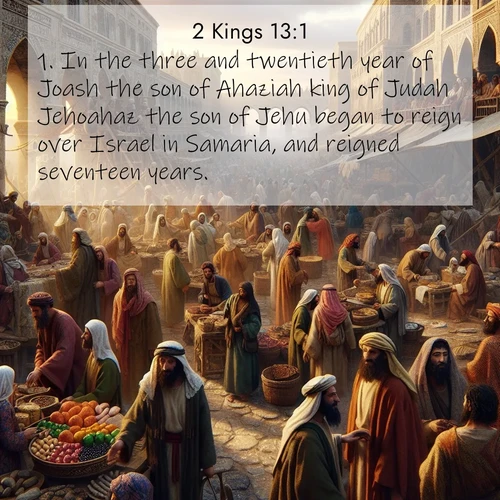
A majestic sunset colors the sky above an ancient temple, now crumbling and abandoned, in the kingdom of Israel.  The setting sun, casting long, ominous shadows over the ruins, represents the decline of spiritual devotion during periods of unrest.  The stonework should appear worn by the passage of time.  The crumbling temple reflects the decline in religious devotion and spiritual well-being during the period of unrest.A group of weary Israelite soldiers, their faces etched with exhaustion and defeat, rest beneath the pale morning light near a ruined watchtower.  Their worn clothing and weaponry symbolize the hardship and adversity of Jehoahaz's reign.  A sense of despair and hopelessness should pervade the scene.  The exhausted soldiers embody the hardship and defeat faced by the Israelite people under Jehoahaz's leadership.A bustling market scene in a Judean city at dawn.  People haggle over goods, but a sense of anxiety and uncertainty lingers in the air, reflecting the political instability during Jehoash’s reign.  The faces of the people should show a mix of hope and apprehension. The scene should be vibrant and detailed.  The bustling market contrasts the everyday life with the political uncertainties of Jehoash's reign.
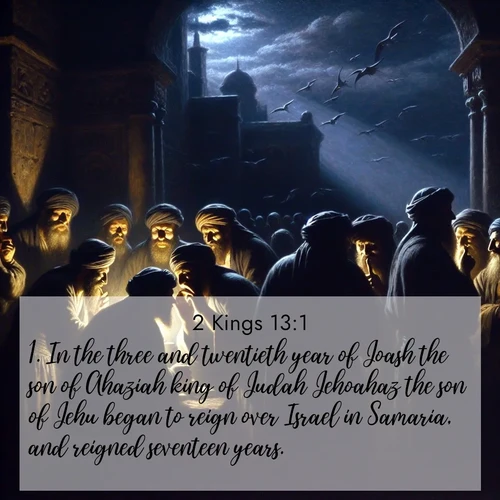
A nighttime scene depicting a clandestine meeting between Israelite officials, their faces obscured by shadows.  They whisper amongst themselves, their expressions conveying suspicion and intrigue. The setting should be dark and mysterious, reflecting the clandestine political maneuvering and conspiracies that plagued the kingdoms during Jehoahaz’s and Jehoash’s reigns.  The clandestine meeting illustrates the secretive political maneuvers and conspiracies prevalent during the era.

NOTE: The images reflect the following descriptions related to the theme : Jehoahaz and Jehoash: A Divided Kingdom

  • Macro closeup of a worn ancient Hebrew scroll detailing the conquests of Hazael, King of Aram, during Jehoahaz's reign. Focus on the faded ink depicting battle scenes and the names of cities sacked. The scroll should be subtly illuminated from a single light source, creating a dramatic chiaroscuro effect.
  • Macro closeup of a collection of ancient bronze and iron weaponry – swords, spears, shields – showing signs of wear and battle damage. Each piece should bear subtle symbols reflecting the competing kingdoms of Israel and Judah. The image should evoke the violent conflicts of the era.
  • Bright morning sunlight bathes a lush olive grove in the hills of ancient Israel. The light, dappled and golden, reveals ancient stone walls and ruins, hinting at a once-thriving village now fallen into disrepair, symbolic of the weakened kingdom under Jehoahaz. The scene should exude a sense of both tranquility and decay.
  • Golden morning light illuminates a vineyard laden with ripe grapes, reflecting the agricultural prosperity that existed in spite of political instability during Jehoash’s reign. The vineyard is enclosed by a low stone wall, symbolizing both the vulnerability and resilience of the kingdom. Wildflowers bloom in the foreground.
  • Evening light casts long shadows across a desolate battlefield. Scattered remnants of broken chariots and shattered weaponry litter the ground; a lone, windswept olive tree stands sentinel, its gnarled branches silhouetted against the fading light, representing the losses sustained during Jehoahaz's reign.
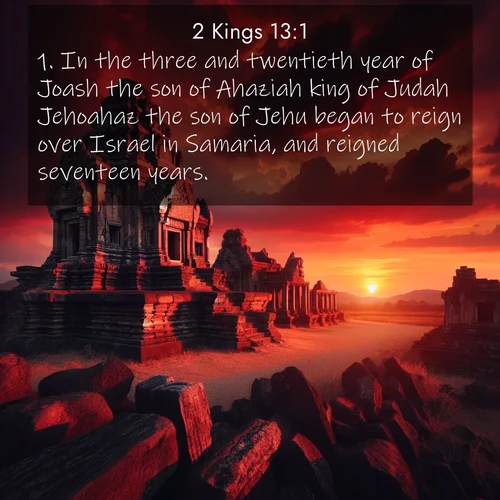
  • A majestic sunset colors the sky above an ancient temple, now crumbling and abandoned, in the kingdom of Israel. The setting sun, casting long, ominous shadows over the ruins, represents the decline of spiritual devotion during periods of unrest. The stonework should appear worn by the passage of time.
  • A group of weary Israelite soldiers, their faces etched with exhaustion and defeat, rest beneath the pale morning light near a ruined watchtower. Their worn clothing and weaponry symbolize the hardship and adversity of Jehoahaz's reign. A sense of despair and hopelessness should pervade the scene.
  • A bustling market scene in a Judean city at dawn. People haggle over goods, but a sense of anxiety and uncertainty lingers in the air, reflecting the political instability during Jehoash’s reign. The faces of the people should show a mix of hope and apprehension. The scene should be vibrant and detailed.
  • A nighttime scene depicting a clandestine meeting between Israelite officials, their faces obscured by shadows. They whisper amongst themselves, their expressions conveying suspicion and intrigue. The setting should be dark and mysterious, reflecting the clandestine political maneuvering and conspiracies that plagued the kingdoms during Jehoahaz’s and Jehoash’s reigns.
  • A dark, moonlit night in a besieged city. The flickering flames of torches cast long, dancing shadows on the faces of anxious citizens peering through a crumbling city wall. The scene should evoke a sense of fear and uncertainty during a time of war.
  • A detailed depiction of a royal seal, perhaps depicting the Lion of Judah or other relevant symbolism, broken and discarded in the dirt. The brokenness symbolizes the fractured state of the kingdom under Jehoahaz and the consequences of his actions and decisions.
  • A close-up of a weathered stone inscription, partially eroded by time, hinting at the names and accomplishments of Jehoahaz and Jehoash. The partially obscured nature of the inscription reflects the obscurity and fragmented history surrounding their reigns.

General themes for this chapter of the Bible:

A link to this resource is much appreciated to let others know about this free christian resource. The AB Church in LAusanne-Renens is happy to make the image collection available for free.


Related Pages: thematic Bible Images (French Version)