Thematic Bible Images

Ahab's Wars and Death: A King's Downfall

The story of King Ahab, his wickedness, and his ultimate demise, a cautionary tale of idolatry and rebellion against God.

Ahab's Wars and Death: A King's Downfall

Livre pas trouvé

Back to Index

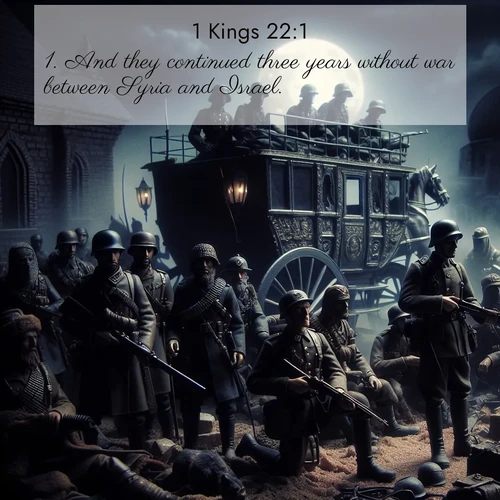
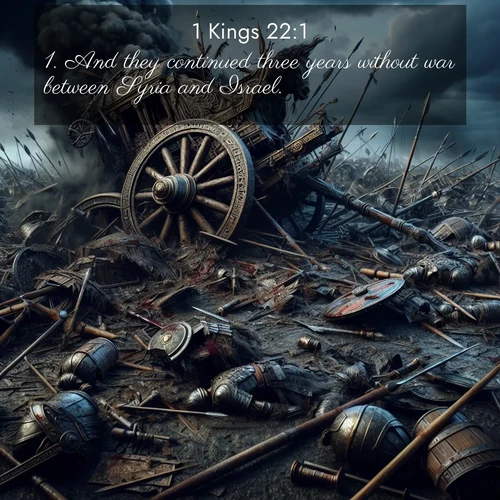
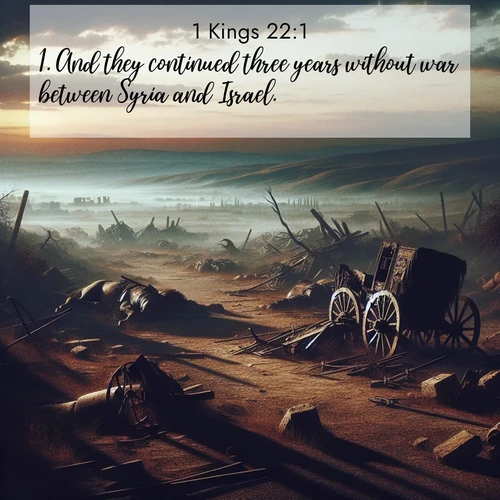
A night scene depicts a group of soldiers guarding Ahab's empty chariot, their faces grim and watchful, as they wait for orders in the aftermath of the battle. The scene is dark and ominous, reflecting the uncertainty of the future.  This uses the night scene to depict the soldiers’ grim reality in the aftermath of battle, focusing on the uncertainty and aftermath of war.A night scene depicts a group of soldiers guarding Ahab's empty chariot, their faces grim and watchful, as they wait for orders in the aftermath of the battle. The scene is dark and ominous, reflecting the uncertainty of the future.  This uses the night scene to depict the soldiers’ grim reality in the aftermath of battle, focusing on the uncertainty and aftermath of war.A detailed depiction of Ahab's chariot, broken and overturned on the battlefield, surrounded by scattered weapons and the remnants of his army.  Focus on the brokenness of the chariot to reflect his fallen state without explicitly showing Ahab.   This focuses on the destruction of Ahab's chariot as a symbol of his fallen state and the end of his reign without including him in the image.
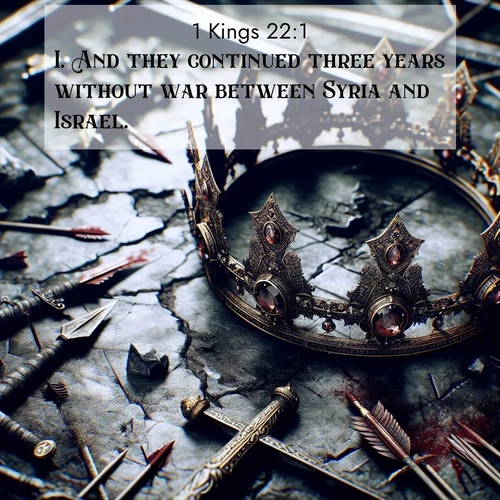
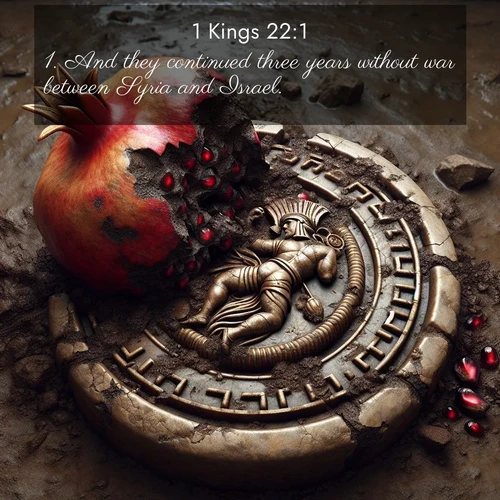
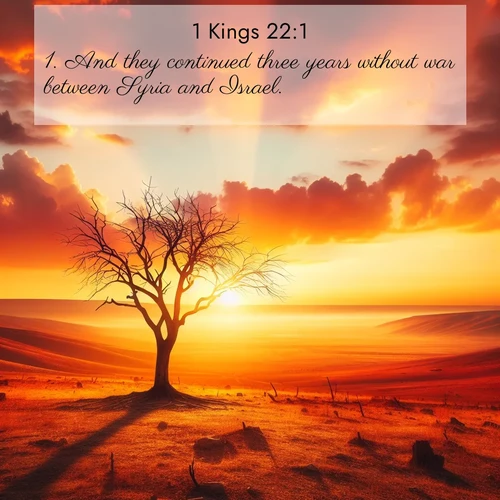
A macro closeup of Ahab's jeweled crown, slightly tarnished and cracked, resting on a blood-stained battlefield, with scattered broken swords and arrows around it, conveying the king's fallen state and the brutality of war.  The image should have a dark, somber mood, reflecting his demise.  This prompt focuses on the aftermath of Ahab's death, emphasizing his fallen status through symbols like a cracked crown and blood-stained battlefield.A macro closeup of Ahab's discarded royal seal, etched with a faded image of Baal, lying in the mud next to a wilted, blood-red pomegranate, symbolizing the decay of his power and the judgment of God. The pomegranate is crushed symbolizing Ahab's broken reign.  This focuses on the decay of Ahab's power and the judgment of God, using symbols of his idolatry (Baal) and the crushed pomegranate representing his broken reign.A vibrant sunrise paints the Jezreel Valley in warm oranges and yellows, revealing a lone, barren tree standing against the backdrop of a vast, empty battlefield.  The tree represents Ahab's kingdom, now desolate and devoid of life, symbolizing the aftermath of his reign and his war.   This uses nature to represent the desolation of Ahab's kingdom after the war, contrasting the barren landscape with the bright morning sun.
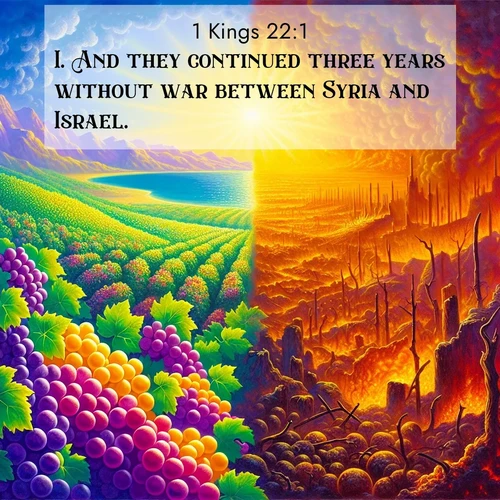
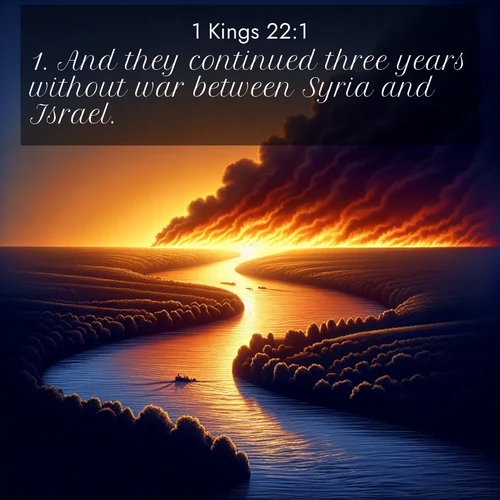
Bright morning sunlight illuminates a lush vineyard, overflowing with ripe grapes, in stark contrast to a distant, desolate battlefield shrouded in dust and smoke, symbolic of the contrast between Ahab's lavish lifestyle and the destruction he caused. This contrasts his wealth with the devastating war.  This uses nature to highlight the contrast between Ahab's lavish lifestyle and the destruction caused by his war, using the vineyard and battlefield as opposing elements.An evening scene in the Jezreel Valley shows the setting sun casting long shadows over a battlefield littered with decaying bodies and broken chariots, evoking a sense of loss and the finality of Ahab's defeat. The colors are muted and dark, reflecting the grim setting.  This prompt uses the evening scene to convey a sense of loss and finality, highlighting the destruction left behind by Ahab's wars.A tranquil evening landscape shows the peaceful setting sun illuminating a flowing river, completely separate from the distant, smoke-filled battlefield. The river symbolizes hope or a return to peace, contrasting Ahab's violent reign and ending.  This contrast the destruction of the battlefield with the peace and hope that can exist even after war, using the setting sun and tranquil river.
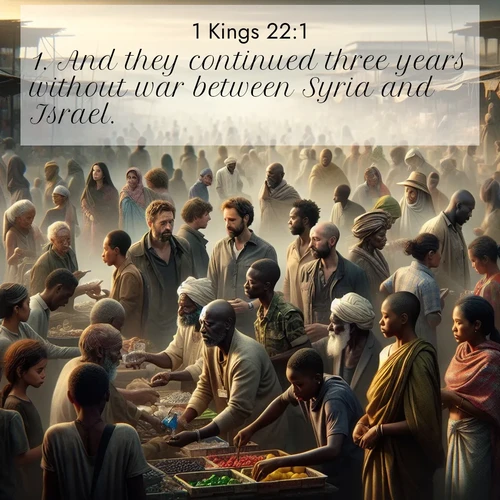
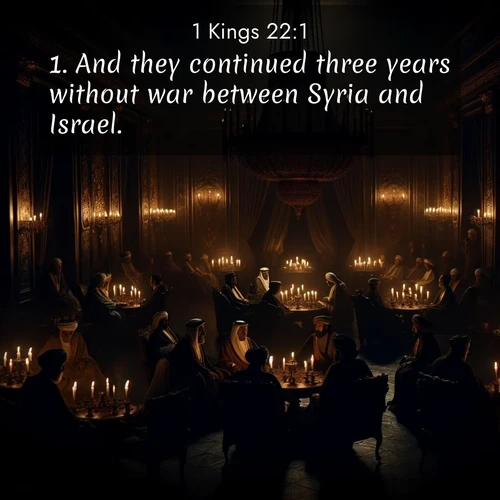
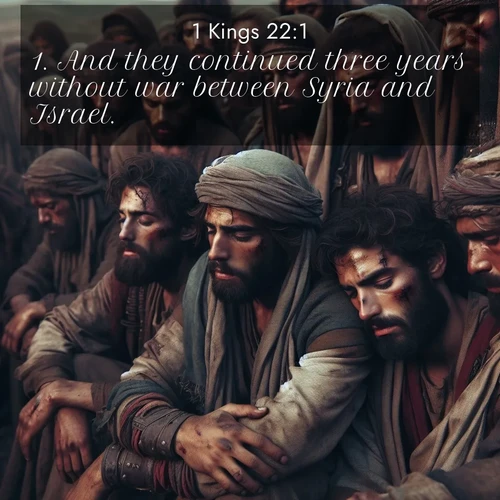
A group of Israelite soldiers, weary and wounded, huddle together during the early morning hours, their faces etched with exhaustion and grief, as they reflect on the losses of battle under Ahab's rule. Their attire and the overall setting should be clearly from the biblical period.    This focuses on the human cost of Ahab's wars, showing weary and wounded soldiers reflecting on the losses.People in a bustling marketplace in the morning, oblivious to the distant war, carrying on with their daily lives, their faces a mixture of worry and hope. The background shows the faint smoke of a distant battlefield, subtly hinting at the conflict.  This shows daily life continuing despite the ongoing war, illustrating the impact of Ahab’s actions on the people.A night scene in a palace showing Ahab’s advisors huddled together in fear, illuminated by flickering candlelight, as they discuss the news of Ahab's death. The room should be lavish, reflecting Ahab's former wealth and now the fear.   This uses the night scene to portray fear and uncertainty amidst Ahab's palace after his death, emphasizing the consequences of his reign.

NOTE: The images reflect the following descriptions related to the theme : Ahab's Wars and Death: A King's Downfall

  • A macro closeup of Ahab's jeweled crown, slightly tarnished and cracked, resting on a blood-stained battlefield, with scattered broken swords and arrows around it, conveying the king's fallen state and the brutality of war. The image should have a dark, somber mood, reflecting his demise.
  • A macro closeup of Ahab's discarded royal seal, etched with a faded image of Baal, lying in the mud next to a wilted, blood-red pomegranate, symbolizing the decay of his power and the judgment of God. The pomegranate is crushed symbolizing Ahab's broken reign.
  • A vibrant sunrise paints the Jezreel Valley in warm oranges and yellows, revealing a lone, barren tree standing against the backdrop of a vast, empty battlefield. The tree represents Ahab's kingdom, now desolate and devoid of life, symbolizing the aftermath of his reign and his war.
  • Bright morning sunlight illuminates a lush vineyard, overflowing with ripe grapes, in stark contrast to a distant, desolate battlefield shrouded in dust and smoke, symbolic of the contrast between Ahab's lavish lifestyle and the destruction he caused. This contrasts his wealth with the devastating war.
  • An evening scene in the Jezreel Valley shows the setting sun casting long shadows over a battlefield littered with decaying bodies and broken chariots, evoking a sense of loss and the finality of Ahab's defeat. The colors are muted and dark, reflecting the grim setting.
  • A tranquil evening landscape shows the peaceful setting sun illuminating a flowing river, completely separate from the distant, smoke-filled battlefield. The river symbolizes hope or a return to peace, contrasting Ahab's violent reign and ending.
  • A group of Israelite soldiers, weary and wounded, huddle together during the early morning hours, their faces etched with exhaustion and grief, as they reflect on the losses of battle under Ahab's rule. Their attire and the overall setting should be clearly from the biblical period.
  • People in a bustling marketplace in the morning, oblivious to the distant war, carrying on with their daily lives, their faces a mixture of worry and hope. The background shows the faint smoke of a distant battlefield, subtly hinting at the conflict.
  • A night scene in a palace showing Ahab’s advisors huddled together in fear, illuminated by flickering candlelight, as they discuss the news of Ahab's death. The room should be lavish, reflecting Ahab's former wealth and now the fear.
  • A night scene depicts a group of soldiers guarding Ahab's empty chariot, their faces grim and watchful, as they wait for orders in the aftermath of the battle. The scene is dark and ominous, reflecting the uncertainty of the future.
  • A detailed depiction of Ahab's chariot, broken and overturned on the battlefield, surrounded by scattered weapons and the remnants of his army. Focus on the brokenness of the chariot to reflect his fallen state without explicitly showing Ahab.
  • A close-up of a blood-stained Jezebel's robe, torn and discarded, lying amidst broken pottery, symbolizing the destruction of Ahab’s kingdom and his wicked queen's downfall. The focus is on the details of the robe and textures to highlight the decay and end of their reign.

General themes for this chapter of the Bible:

A link to this resource is much appreciated to let others know about this free christian resource. The AB Church in LAusanne-Renens is happy to make the image collection available for free.


Related Pages: thematic Bible Images (French Version)